
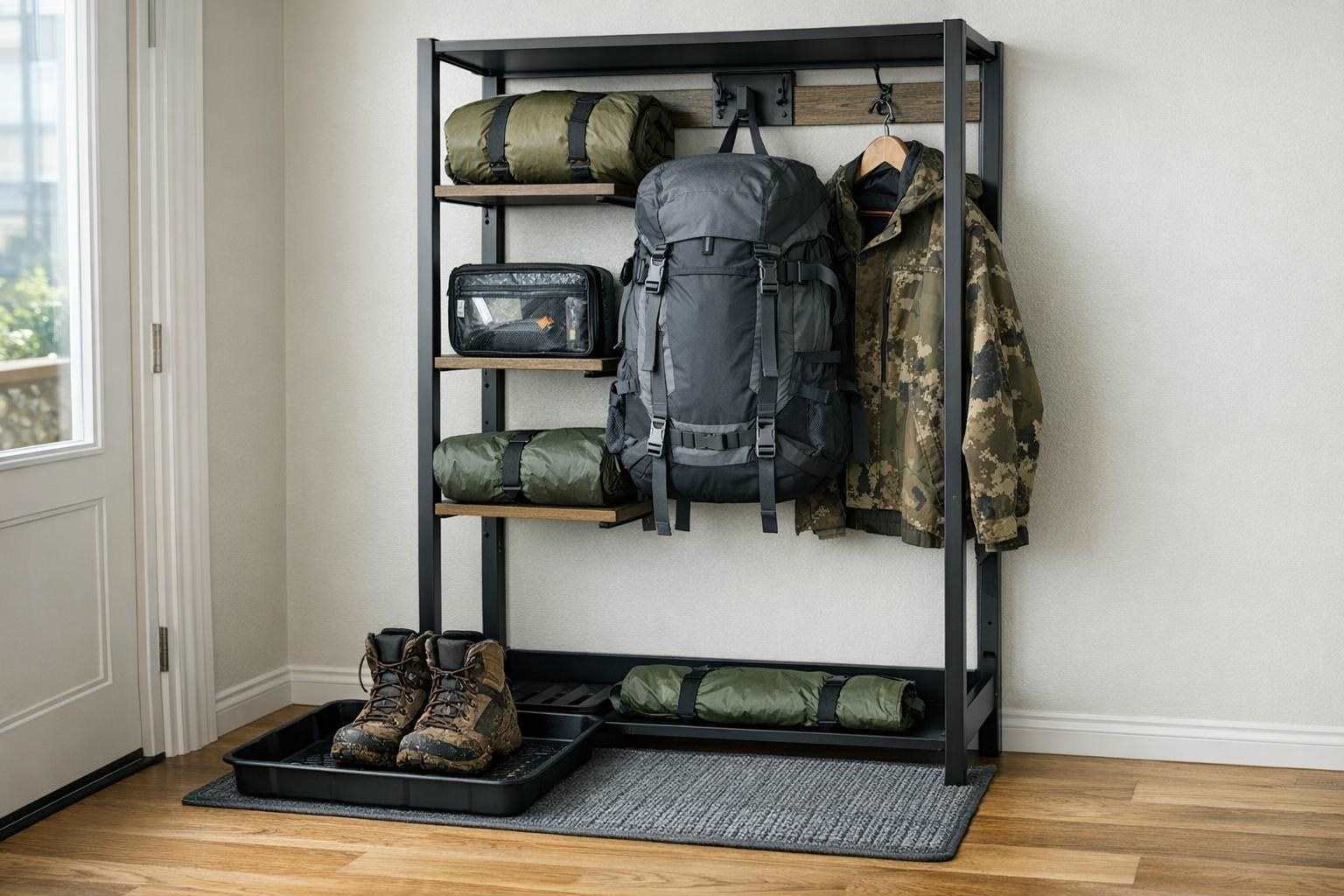
You may have mud-caked boots, a tent, packs, cooking gear and warm hunting layers but a small apartment does not have room for all of that. The normal result is that the gear is stacked in a closet, scattered around the entrance of the apartment or even worse, left behind to develop mildew, be missing parts or dead batteries. Organizing gear for storage is not about buying more containers but assigning each item the best storage, making drying and inspecting gear a part of your routine and storing frequently used items in easy-to-reach locations.
Start with a gear audit, not another storage bin
Use the gear from your next trip to help do an inventory of your current equipment. Sort it into four categories: ready to go, needs to be cleaned and/or repaired, seasonal, and equipment that is no longer of value to you. Don't use up all of the space in your closet by preserving poor gear. Let the gear that you actually use take up the space it deserves.
When going through all of your gear, look for grit in zippers, damp or dirty fabrics, cracked or broken plastic parts, loose or missing straps, and missing buckles. Also check for batteries that have been left in lights, and for any other parts that could have been damaged in storage. Small problems with your gear are much easier to fix prior to your trip than they would be at the camp site or on the trail.
Keep a very short list of what you have to check for (e.g. "sleep system – clean and dry" or "stove – inspect before use"). In many cases a simple note to self will do.
Give the entryway a dirty-gear boundary
First, the dirty gear needs to leave a boundary at the entry point of your home. A good washable mat or a boot tray with a narrow utility surface to hold additional gear can keep the grime from spreading throughout your home. Hang coats and shells with good airflow between them. Do not stash them in a closed tote or at the bottom of a bed.
Do not store damp clothing in closed tote bags in your closet under your bed, etc. Allow all gear to fully dry before storing them away. Items that cannot be dried in a timely manner must be treated as unfinished business before you put your camping gear away for storage.
Allow boot soles to dry completely prior to storing them. Although floor space is precious, avoid placing boot soles near to clothing, bedding or in stacks of cardboard boxes, to prevent damp spreading to valuable items. A tray on the floor to store wet boots is an ideal spot to remind family members that those boots have not yet been cleaned and dried.
Build vertical storage around the equipment you use most
Save floor space by utilizing the highest reaches of your apartment's walls. Organizations like the Closet Manufacturers Association can direct you to quality closet storage systems. Consider too freestanding racks or shelves which can add a lot of storage to a small apartment. Always be certain that any wall storage you bring in will hold as much as you throw at it.
When storing gear that are made of soft materials like clothing and bedding, store them in the broadest categories possible. Instead of storing sleeping bags in separate bags, store them all in one large tote. Similarly, store all of your camp cooking gear in another large tote and so on. Pulled together in this manner, the bulkiest gear in your apartment can still be easily stored.
Make sure to position frequently used gear so that it is easily retrievable from a standing position. Store seasonal gear on higher tiers of a storage unit, but only if it is safely reachable. Do not overfill your storage system – full storage quickly turns to floor storage that is difficult to utilize.
Separate hunting equipment by condition and access
Used clothing and field packs from trips should be stored separately from camping gear that has not yet been used. Also, remember to check technical fabrics, insulation, footwear, and any scented products for camping (including scented-control products) for proper washing according to manufacturer's instructions. Do not use your apartment shower and washer/dryer as an immediate fix to immediately 'clean' your hunting clothes of dirt/moisture. Immediately bagging smelly hunting boots, packs, gloves, etc. also keeps these items from spreading dirt and odor to clean layers, camping gear, and general clothing in storage.
Clean clothes such as camping clothing are best stored in lidded totes to keep them from getting dusty. Items that are going to be wet or are already damp are best stored in open shelves or hung in breathable bags or on hooks. The categories for storing gear for hunting should be clearly labeled such as for cold weather layers, for field repair, for navigation and lights etc. This way you can more easily do a pre-trip check to make sure you have everything you need.
Keep sharp items (knives, scissors, tools, etc.) stored in their cases or sheaths. If you have firearms, for example, you will need to check local laws for storage and dispose of any ammunition properly. In addition, special care may be required for the storage of certain items like oil-filled gear. Store items such as these outside of regular household storage and ensure they are out of the reach of children and other individuals who might use them by mistake.
Make small camping gear easier to find
Many small items can get lost in larger items such as our sleeping bags or tents. Headlamps, little items of fuel related items like lighter fluid or dry fire, camp shoes, closed toe boots, trekking poles, wet clothes, extra layers, socks, emergency bivvy sacking, cordage, water treatment items, bowl and spoon, repair tape and extra batteries for lights are all examples of these items.
Organize camping gear into 4 categories of small items: Lighting & Power; Repairs; Navigation; and Cooking. Check batteries for use before storing and follow the maker's and the device's recommendations for storage. Look at fuel canisters and other consumables for date and for special storage and for disposal in your area before storing them in your indoor storage.
A small checklist on the wall next to your main gear container, which lists all of the things you need to take for a typical camping trip (eg: shelter, sleep system, water, food prep, light sources, extra warm clothing, first aid kit) can help prevent last minute panicked searches for 'lost' gear.
Use a reset routine after every outing
Many of the best ideas for space saving storage are actually just routines to store your gear. When you return from a trip, take the time to empty your pack of rubbish, sort out items that may have become damp and find a place to repair them. Once you have gone through all your gear and it has all been cleaned and dried, put it back in its designated storage container.
Every few months go through your storage and assess it. Determine if any items are too hard to reach. Find out if there are any containers that you have forgotten that you even have. See how many duplicate items you have for things that you will need for a particular season. Then move the most used items to a more accessible location, cut back on the duplicate items and reorganize your gear for the upcoming season.
An apartment is never going to be a gear shed so we have to work within the confines of the space. A clean-to-dirty boundary, vertical storage, labeled categories for our gear and an effective reset routine for our camping, hunting and outdoor recreational pursuits all can be managed and supported within an apartment.