
Navigating Legal Boundaries for Public-Land Hunting
When getting ready for a public-land hunt the process starts long before you step onto the land. You need to make sure your planned route does not cross onto land ignore closures or break access rules. A good plan can easily turn into a trespassing problem if boundaries are not clearly understood. Always treat access points and land boundaries like gear. Check them using sources mark locations and when in doubt choose caution.
Understand the Legal Framework First
Before you decide where to hunt your task is to understand the rules for the area. Public land does not mean access. Different parcels may have rules, such as closures limits on entry bans on vehicles or special access requirements. Even public roads near property do not guarantee access to the land.
The first step is to find and read the regulations from the wildlife agency or land-management office for that area. Get familiar with dates allowed hunting methods, access rules, tagging rules and unit-specific regulations. Keep in mind that these rules can change so never rely on maps or information from years. Think of the map as a planning tool not as permission to access the land.
Double-Check Boundary Information
To stay informed use two sources of information. Start with a land-status map. This map shows property ownership, management units and any closures. Then use an up-to-date topographic or satellite image. This will show the terrain, including roads, streams, fences and potential hazards.
An official map gives you the context. A terrain view helps you see how your planned route will work in life. Remember, neither source will be perfect. Boundaries might not be obvious. Digital maps may not load properly in areas with signal.
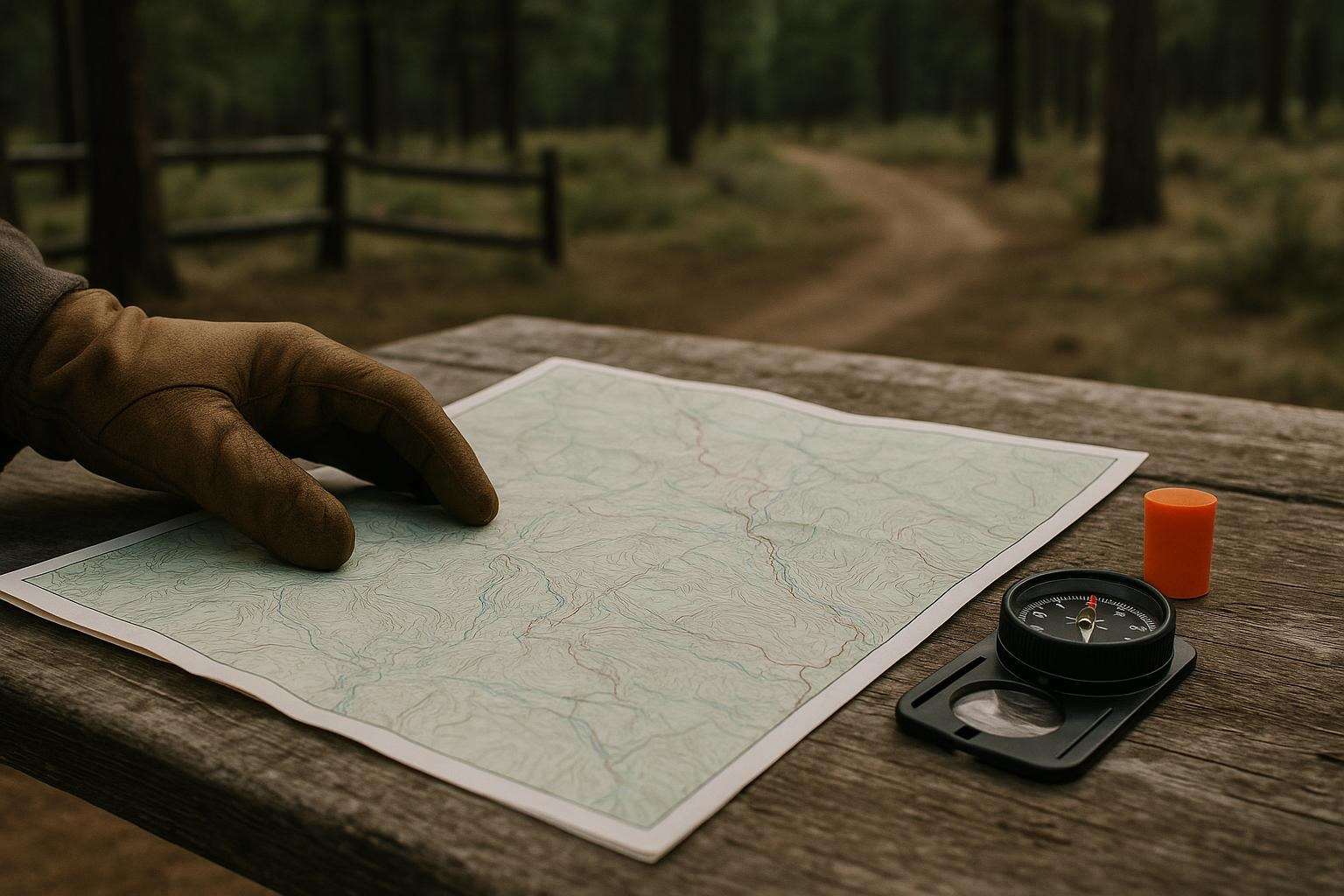
At home save areas for use. Carry a map with spots marked. Note the trailhead, parking areas, parcel corners and any unclear boundary lines. If a boundary line runs through woods with no signs or gates treat it as a decision point.
Recommended Checklist
– Confirm current management unit details and seasonal regulations.
– Verify access points of focusing on your destination.
– Mark any private lands, closed areas or unclear boundary lines.
– Download maps for offline use and keep a physical backup.
– Share your route parking details and return plan with trusted companions.
– Plan what to do if you come across unconfirmed boundaries.
Develop an Ethical Approach to Access
Even if your path is legal your actions can still cause tension. Avoid blocking gates blocking farm entrances or entering fields. These actions can damage trust. Endanger access for others in the future. Remember conservation includes building relationships with landowners and those who maintain the land.
Always use designated parking areas. Treat. Fences with care. Just because a gate is open does not mean you are allowed to enter. Be cautious of paths that might be private than public. If your access depends on permission from a landowner get it directly. Clarify which areas, dates and ways you can use the land. Written permission helps avoid misunderstandings, especially when multiple groups use the land.
Understanding boundaries is also key when making hunting decisions. If your game is close to a line it may be better to stay put or adjust your approach. Do not risk a shot. If a wounded animal crosses onto property retrieval becomes an issue. Know recovery laws. Keep relationships with landowners. The right to hunt does not mean you have the right to retrieve the animal.
Prepare for Scenarios
The gear you carry can help stop a navigation issue from becoming an safety problem. Always bring a charged phone in a case a map, a compass and a battery pack for longer trips. A compass is essential if your phone fails or if heavy trees block GPS signals. Make sure your paper map is protected from rain and stays readable.
Write down the identifiers for management units and access roads. Keep your emergency contact list close. Set a meeting point in case of delays. If you are hunting in a group agree on a turnaround time and a plan for when someone does not return.
Dress for the part of your planned route. Conditions like ground, thick brush or steep slopes can make short trips difficult as the day gets dark.
Make Decisions Before Taking the Shot
Before the excitement sets in set rules for handling uncertainty. If you are not sure you are at a confirmed boundary go back to the marker. Yes this may take time.. It is a way to respect the land and your relationship with landowners. The same rule applies to areas. If you are unsure. Check regulations. Do not rely on memory or outdated information.
Good planning should also include goals. You want to improve your understanding of access routes scout legal hunting grounds sharpen your navigation skills. Ensure you can return without causing trouble for others. Filling a tag is not more important, than knowing where you are allowed to hunt.