
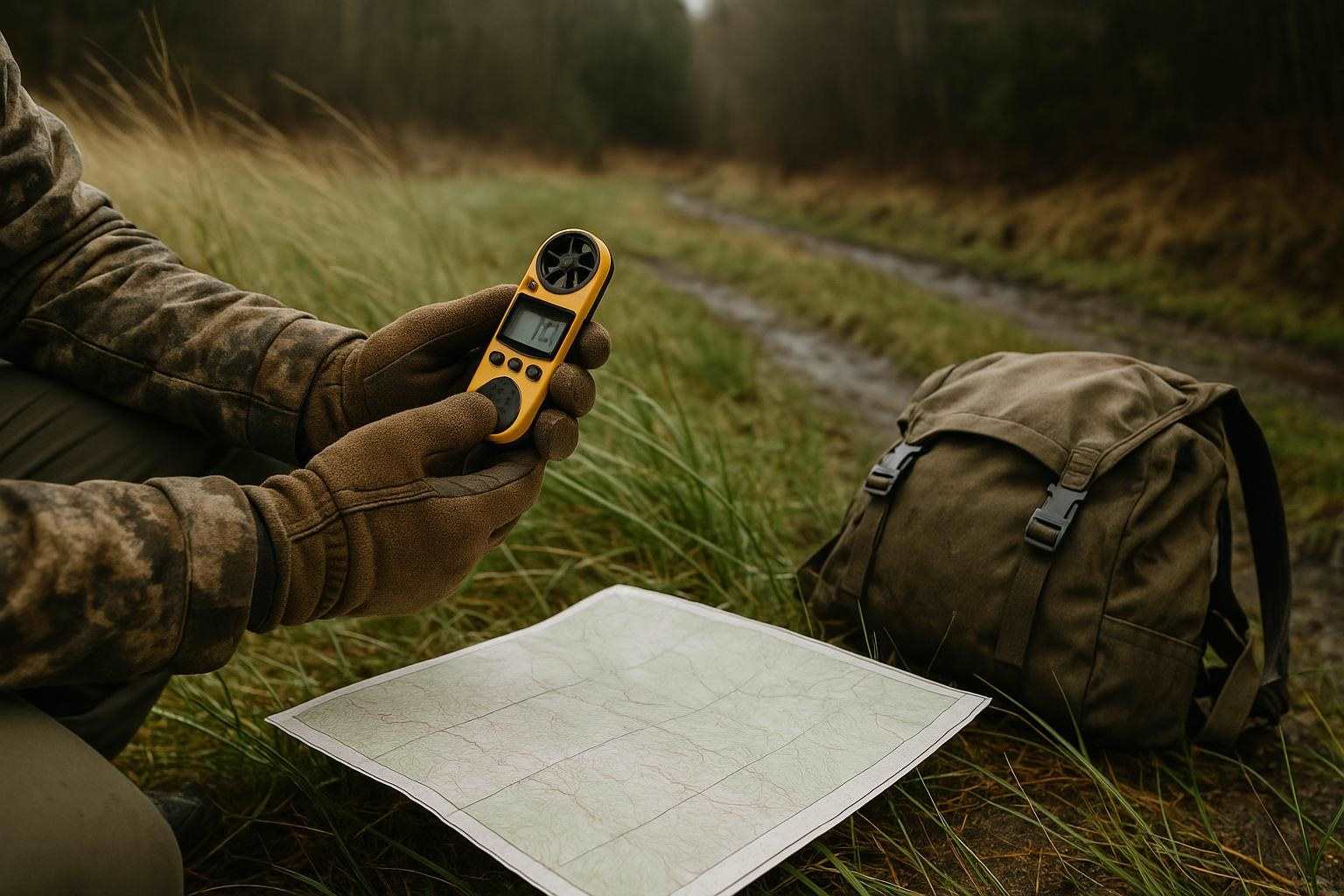
A promising area can become a poor choice when the wind shifts, access turns noisy or the forecast changes before you arrive. Buying a new pack, blind or optic before answering those questions adds expense without solving the real problem. Good preparation matches equipment and tactics to expected conditions while leaving room to change plans. The payoff is not a guaranteed result, but a safer, more ethical outing with fewer decisions made under pressure.
Start with the ground, access and objective
Begin with the property rather than the gear. Mark likely entry and exit routes, water crossings, steep ground, thick cover and places where movement could disturb animals or other hunters. A setup suited to a quiet field edge may fail in dense timber, wet grassland or broken upland terrain.
Consider whether the route remains usable after rain, whether a vehicle can leave without damaging the ground and whether the final approach exposes your position. If reaching a location requires crossing sensitive habitat, nesting cover or a newly planted area, choose another route. Habitat stewardship is part of preparation.
Define the objective before selecting equipment. Scouting, sitting briefly, carrying supplies over distance and staying out through changing weather require different priorities. A lighter load may improve mobility, while extra clothing or a stable rest may suit a long stationary wait. Choose what supports the task without encouraging unsafe shortcuts.
Read weather and wind as moving conditions
A forecast is a starting point, not a guarantee. Check temperature, precipitation, cloud cover and wind direction for the time you expect to travel and sit, then compare them with local terrain. Ridges, draws, timber and open slopes can alter airflow. A breeze that seems steady in the open may swirl near a bluff or disappear in thick cover.
Wind affects more than scent. It can change how quietly you move, how quickly you become chilled, how well you hear and whether an exposed position remains comfortable enough to use responsibly. Rain may soften footfalls but increase runoff, slippery surfaces and the risk of damaging access roads. Cold raises the importance of clothing and hand protection; warm conditions increase the need for water, ventilation and careful meat handling.
Build a decision point into the plan. If wind consistently moves toward the area you need to approach, reconsider the route. If conditions shift unpredictably, favor a location and activity that allow a clean exit instead of forcing a sit that no longer makes sense. Adaptability is usually cheaper than buying equipment to compensate for a poor location.
Match equipment to the weakest link
Lay out only gear that solves a known problem. Clothing should manage moisture and movement, footwear should suit the ground and distance, and packs should carry essentials without adding clutter that catches on brush. Test the load while walking quietly, sitting, kneeling and climbing, not just while standing indoors.
Optics, navigation tools and lighting should each have a clear job. Confirm that you can operate them with expected gloves and that batteries are protected from cold and moisture. Any weapon, ammunition and carrying system must be legal and appropriate to the hunt; safe handling and secure transport are non-negotiable. Do not modify equipment or rely on unfamiliar gear during a pressured outing.
Identify the first failure you would notice: wet feet, fogged lenses, a dead light, an overloaded pack or an unreliable map. Fix that weak link before adding comfort items or specialized accessories. Borrowing, renting or using existing equipment for scouting can reveal what you actually need.
Prepare for an ethical opportunity, not a forced one
Preparation should make it easier to pass on a poor opportunity. Know your effective range and personal limits, and do not take a shot when visibility, footing, background or identification is uncertain. Expensive gear cannot replace judgment.
Plan recovery before leaving home. Consider the distance to the vehicle, terrain, cooling and transport needs, and whether you have the tools and help required. In warm weather or difficult access, recovery may determine whether a location is suitable.
Respect people and wildlife while scouting and hunting. Use established access where possible, maintain separation from other parties, secure food and waste, and leave gates, fences and vegetation as you found them. Know when pressure on an area is becoming counterproductive and move elsewhere.
Verify rules and build a short go-or-no-go check
Regulations can change by jurisdiction, season, species, unit, weapon type and land status. Before every outing, confirm current licensing, permits, season dates, tagging or reporting requirements, legal equipment, shooting hours, access permissions and restrictions on bait, vehicles or public land. Use official wildlife agency or land manager guidance rather than an old note, a friend's memory or a previous season's plan.
Keep the final check short enough to use:
– Is the area open, and do I have permission or required access authorization?
– Are the season, species, equipment and hours legal for this hunt?
– Does the wind support my approach and chosen position?
– Can I move, identify a target and make a safe shot under these conditions?
– Can I recover, transport and report the harvest properly?
– What condition would make me leave or change plans?
Decide that last point before fatigue, excitement or sunk cost takes over. A cancelled sit, altered route or empty-handed return can be the correct outcome when conditions no longer support a safe, ethical plan.
Spend after the decision, not before it
Once the location, weather, access route and legal requirements are clear, gear choices become easier to defend. You may need quieter clothing, better rain protection, more reliable navigation or simply a lighter load. You may also find that no purchase is necessary.
Review each outing while details are fresh: where the wind behaved differently, what became uncomfortable, which item went unused and what caused unnecessary disturbance. That record improves preparation without turning every change into a shopping exercise. A capable hunting setup is not the most elaborate one; it fits the ground, forecast, rules and responsibility of the hunt.